 Listen on Spotify
 Apple Podcasts
Many change efforts focus on behavior: what people should do differently, what processes should change, what practices should be adopted. The Anatomy of Peace invites a deeper shift.
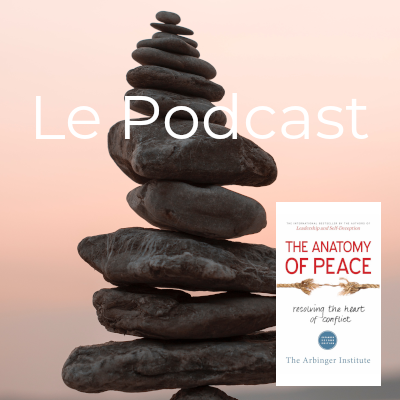
In this episode of Le Podcast on Emerging Leadership, John Poelstra and I explore the book The Anatomy of Peace by the Arbinger Institute and what it teaches about leadership, responsibility, and inner stance.
From behavior to being. John first recommended The Anatomy of Peace in our previous conversation on how (not) to provide feedback. I read it twice and fell in love with it. In Changing Your Team From The Inside, I write that change starts with you. The Anatomy of Peace pushes this idea further: change starts with who you are. Not with techniques. Not with intentions. With the way you relate to others, and to yourself.
A heart at peace or a heart at war. One of the core ideas of the book is the distinction between a heart at peace and a heart at war. When our heart is at war, we tend to see others as obstacles, objects, or threats. When our heart is at peace, we see others as people — human beings with their own needs, struggles, and intentions. This inner stance profoundly shapes how we lead, collaborate, and respond to conflict.
Boxes, judgment, and responsibility. We discuss the idea of being "in the box" — stories we tell ourselves such as I deserve, I'm better than, I need to be seen as, or I'm worse than. These boxes justify our behavior and keep us stuck. We also explore how this maps well with Christopher Avery's Responsibility Process, where responsibility increases as we move away from blame and justification.
Signals from the body and inner practices. Another powerful idea we discuss is how our body gives us signals when our heart is at war. Tension, discomfort, and reactivity can become cues to pause and reflect. We also touch on practices that support this inner work — Hoʻoponopono and meditation — which help create space between stimulus and response, allowing more intentional leadership.
Leadership starts within — with how we see others, how we relate, and who we choose to be in each interaction.
In this episode, we discuss
- •From behavior to being — change starts with who you are.
- •A heart at peace vs. a heart at war: how our inner stance shapes leadership.
- •Seeing others as people vs. as obstacles, objects, or threats.
- •Being 'in the box': the stories we tell ourselves (I deserve, I'm better than, I need to be seen as, I'm worse than).
- •The link with Christopher Avery's Responsibility Process — moving away from blame and justification.
- •The choice we always have: honor or betray our senses; judge or become curious; judge ourselves or show compassion.
- •Body signals when our heart is at war — using tension and reactivity as cues to pause.
- •Inner practices that support this work: Hoʻoponopono and meditation.
References mentioned in the episode
- Original blog post — The Anatomy of Peace
- The Anatomy of Peace — Arbinger Institute
- Christopher Avery — The Responsibility Process.
- Hoʻoponopono — Hawaiian practice of reconciliation and forgiveness.
- Previous episode — How (Not) to Give Feedback, with John Poelstra
- Changing Your Team From The Inside — Alexis Monville
 Castbox
 Amazon Music