 Listen on Spotify
 Apple Podcasts
Open leadership is often described through principles — transparency, inclusivity, collaboration. But what does the job of an open leader actually look like, day to day?
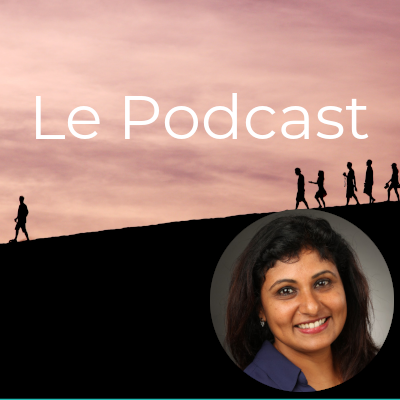
Preethi Thomas, Software Engineering Manager at Red Hat, walks through her journey from individual contributor to manager: the OPT model (Opportunity × Passion × Talent), Red Hat's Aspiring Managers Program, the four axes of leadership, the role of context and trust, and the long-term mentoring relationships that built the village around her.
"You need a village to help you succeed." — Preethi Thomas
In this episode, we discuss
- •Preethi's path: from software developer and QE to Red Hat manager.
- •The OPT model — Opportunity × Passion × Talent — and Red Hat's Aspiring Managers Program.
- •Four axes of leadership: people, business, system, execution — and why execution is a result of the other three.
- •Context and trust as the roots of collaboration.
- •The five characteristics of open organizations — and why trust is what they all add up to.
- •Inclusivity in practice: who speaks, who doesn't, and how heated discussions are handled.
- •'You need a village': long-term mentoring, being both mentor and mentee.
- •Short-term wins to build confidence in a new role.
- •Recognizing one-on-ones as real work.
- •Books that shaped the journey: The First 90 Days, The Manager's Path, The Making of a Manager, The Five Dysfunctions of a Team.
References mentioned in the episode
- Original blog post — The Job of an Open Leader
- The OPT model — Opportunity × Passion × Talent (Red Hat).
- Red Hat Aspiring Managers Program (AMP).
- The five characteristics of open organizations: transparency, inclusivity, adaptability, collaboration, community.
- The First 90 Days — Michael D. Watkins.
- The Manager's Path — Camille Fournier.
- The Making of a Manager — Julie Zhuo.
- The Five Dysfunctions of a Team — Patrick Lencioni.
Transcript
Alexis:
Can you tell us a little bit more about your background?
Preethi:
Thank you, Alexis, for the invitation. I'm Preethi Thomas, manager for the Containers team at Red Hat. I have a background in computer science — a master's in computer applications from a university in India — and I worked there for a few months before moving to the US about twenty years ago. I started off as a software developer in Visual Basic, C and C++.
Then I moved to quality engineering — at the time it was a lot more manual testing — and I enjoyed being on the customer side of things. After moving to the US I went back and forth between development and QE for a while. Once I had my kids I decided QE was where I could focus more while managing my family, and I found my passion there. I applied to Red Hat three times before I finally got hired, as a quality engineer and individual contributor. A few years in, I was at the crossroads: stay an individual contributor or move into a leadership role? My manager guided me through it. At Red Hat we follow the OPT model — I remember a session at QE camp in Brno about it, and that's when I really started thinking about what I'm passionate about and where the opportunities are.
Alexis:
You need to tell us a little bit more — what is the OPT model?
Preethi:
OPT is the intersection of Opportunity, Passion, and Talent. I've always felt I'm passionate about people — growing them, being there for them — and as a parent I felt I had the talent for it. The next thing was the opportunity. Doing more research I found Red Hat's Aspiring Managers Program — AMP training. I took it and decided two years ago to move into management. Here I am, and so far I'm enjoying it.
Alexis:
What I like about Red Hat is that the Aspiring Managers Program gives you tools and insights even if you decide to stay an individual contributor — to increase your impact as a leader from that seat. You mentioned growing people. What other aspects attracted you to management?
Preethi:
I felt I was a little too focused on just what I was doing. I liked the idea of getting more perspective into the company's vision and being able to help others who like being individual contributors make those connections better.
Alexis:
When I describe a leader's role, I usually use four axes. Execution — what you and your organization deliver. People — how you attract, retain and develop people so they can be their best (that should really be the first axis, I just messed it up). Business — strategy, customers, partners, communities, the broader context. And system — we live in systems, and a bad system beats good people every time, so we have to keep improving the system. How do you feel about those four axes?
Preethi:
I completely agree. I'd probably put execution last, because once you have a strategy, a business problem you're solving, you're taking care of your people, and you're removing obstacles —
Alexis:
The system part — yes, removing obstacles is a great summary.
Preethi:
Once those three are taken care of, execution comes naturally. Execution is a product of the other three.
Alexis:
It's relatively rare for people to have that level of clarity. Many ICs and even some managers I've asked are 100% focused on execution; the rest is 'a manager problem.'
Preethi:
When you take care of people and create context — the why — they understand the bigger picture. As an individual contributor I was sometimes too focused on what I was doing. Once I started thinking outside the box and made the connection, my passion increased.
Alexis:
Open organizations are said to have five characteristics: transparency as a foundation, inclusivity, adaptability, collaboration, and community. Do you feel one is more important than the others, or are they all equally important?
Preethi:
Each is important in its own way. The product of all of them together is trust — without trust, you lose everything. When you have open communication and transparency, you create a culture of collaboration, and it becomes easier to gain people's trust and help them move forward. Transparency and communication are how I create context for my people.
Alexis:
What about inclusivity — welcoming others' perspectives?
Preethi:
To have a healthy, collaborative community, you have to be inclusive. As a woman you notice contexts where people aren't being inclusive — you notice it more when you're in a minority group. The end result of not being inclusive is a retention problem: people with diverse opinions don't want to stay. I really don't know which of the five is better than the others.
Alexis:
On inclusivity — it's sometimes hard to tell whether a team or community is inclusive enough. What signs should we look at?
Preethi:
I'm not an expert, but a couple of things. There's no bar — there's always room for more. If you have fewer outside contributions to a company-sponsored project, something isn't right. Be mindful of the platforms you use — email lists, GitHub conversations — for hostility. It's okay for discussions to get heated, but if heated discussions cause people to leave the community, you're doing something wrong. The signs are there if you're paying attention.
Alexis:
How do you get people in your team to pay more attention to those signs and to fix the issues?
Preethi:
By really paying attention. If a conversation happens that you notice, raise awareness. Sometimes you don't see it but someone raises an incident to you — get to the why and coach your people on the right behaviors. Make sure they're aware that something they did might have caused someone to feel a certain way. If you see something, say something. I might say, 'I felt this' — it doesn't mean you felt the same way, but next time you might think, 'this could be offensive to X, Y, and Z.'
Alexis:
Do you feel that's the manager's job in particular, or everyone's?
Preethi:
Everyone's. A manager isn't watching every conversation, especially in open source communities. A manager can't be a gatekeeper for the community — we make sure expectations are known, and it becomes everyone's responsibility to be inclusive.
Alexis:
That's where team agreements and codes of conduct come in — raising awareness of the expected behaviors. You also encourage mentoring in your team. Tell us more.
Preethi:
I'm very passionate about this. In my journey to be here, you need a village to help you succeed. I have a village of mentors, but I didn't have a formal mentor until about four or five years ago. Once I got one, my growth was exponential. They helped me crystallize what I wanted by asking the right questions.
I've read that you should use a mentor for a period and then move on, but I've had excellent relationships with all my mentors and I keep learning from them — I don't want to stop. It's my village of support. Because of what mentoring did for me, I really encourage my team to be both mentors and mentees. Wherever you are in your career, you have aspirations for the next thing, and everyone has something to teach. It took me a long time to realize I had something to offer too.
Alexis:
How does it work for the people you nudge into being a mentor — some are reluctant?
Preethi:
I'm open and honest about my journey, and I share how the relationship helped me. When people hear stories and see the value, they don't hesitate. Even now I sometimes feel I have nothing to offer a mentee — but if I think back, there was someone looking for what I was looking for at the time.
Alexis:
Last week I had a discussion with a mentee who started by asking me about what I was working on. She stopped at one point and said, 'This makes me think about something I'm working on right now.' We discussed her topic, and in designing something for her we ended up designing a solution to one of my problems. It's a social learning experiment — that one 40-minute call was the embodiment of why these relationships matter.
Preethi:
Absolutely. I have a mentee right now, and as I'm asking her questions I keep thinking, 'This is where I was — am I doing what I'm preaching?' Maybe there's room for improvement for me too. It instills the qualities a little more — you're helping someone, but you're learning as you go.
Alexis:
When you started your journey, what is the one thing you wish you had known?
Preethi:
It probably ended up being multiple things. I felt I had the tools but not practical experience. I came across The First 90 Days about 60 days into my new job — I wished I'd read it before starting. The book talks about short-term wins and long-term wins. Short-term wins really would have helped me realize I was on the right path. For the first three months I felt like I didn't know what I was doing. Tangible things you can check off in those first months give you the motivation to keep going.
Another thing — going from individual contributor to manager, it took me a long time to admit to myself that my one-on-ones are part of my job. It felt like, 'I'm just having a conversation, I'm not verifying a bug, I'm not writing code.' Seeing it written down as part of my responsibilities was important.
Alexis:
Is there a question I should have asked you?
Preethi:
Along with the mentors and my manager, business books have helped me. I have post-its from multiple books on my desk. A few I really want to call out: The First 90 Days for anyone starting a new job; The Manager's Path and The Making of a Manager — both written by people who grew from individual contributor in tech into management, with really honest stories about what didn't work for them; and The Five Dysfunctions of a Team — I'm now in the 'how can I help my team' phase of my journey.
Alexis:
Combining book reading with mentoring and sharing the nuggets you find — that can be a powerful combination. Anything else you want to share with the audience today?
Preethi:
I'm really thankful for the Red Hat mentoring program. With my personality — I'm an introvert — I wouldn't have reached out to you on my own. So I'm grateful for the program that found me my mentors. Shout-out to all the people in my village.
Alexis:
I hope they'll listen and appreciate your progress. Your mentees will see the path forward and help others grow too — scaling their impact. That's really the job of an open leader. Thank you very much, Preethi — that was great to have you on Le Podcast.
Preethi:
Thank you so much for this opportunity. I enjoyed it as well.
Alexis:
Thank you for listening to this episode of Le Podcast. Go to blog-alexis.monville.com for the references mentioned in the episode and to find more tips to increase your impact and satisfaction at work. Drop a comment or an email with your feedback, or just to say hello. Until next time, to find better ways of changing your team.
 Castbox
 Amazon Music