 Listen on Spotify
 Apple Podcasts
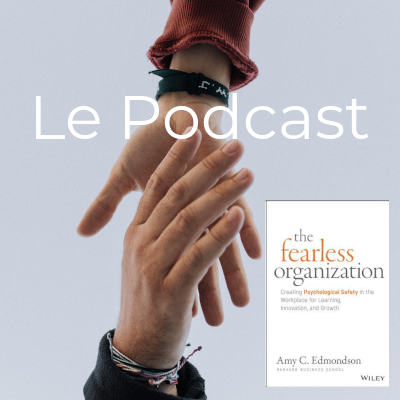
Psychological safety is a term coined by Amy Edmondson, author of The Fearless Organization. At its core, psychological safety describes an environment where people feel safe to speak up, ask for help, take risks, and admit mistakes without fear of being blamed or rejected.
In this episode of Le Podcast on Emerging Leadership, I explore why psychological safety is such a foundational condition for effective teamwork.
Psychological safety as a conversation starter. I first discussed psychological safety with my team when sharing Google's work on Project Aristotle, which identified psychological safety as the most important factor in high-performing teams. What made it powerful was not the conclusion itself, but the conversations it enabled. Psychological safety gave us a shared language to talk about fear and risk, mistakes and learning, inclusion and respect.
Beyond safety as comfort. Psychological safety is sometimes misunderstood as being "nice" or avoiding challenge. In reality, it enables honest feedback, learning from mistakes, healthy disagreement, and shared responsibility. Without psychological safety, teams tend to hide problems, avoid risks, and limit their contribution.
Psychological safety is not something you install. It is something you practice — through everyday interactions and leadership choices.
Assessing psychological safety in a team
A simple set of questions you can use to start the conversation. Each one can be answered on a scale from "Strongly disagree" to "Strongly agree". They are not a diagnostic tool — they are an invitation to reflect.
- 1.When someone makes a mistake on my team, it is often held against them.
- 2.In my team, it is easy to discuss difficult issues and problems.
- 3.In my team, people are sometimes rejected for being different.
- 4.It is completely safe to take a risk on my team.
- 5.It is difficult to ask other members of my team for help.
- 6.Members of my team value and respect each other's contributions.
References mentioned in the episode
- Original blog post — Psychological Safety
- The Fearless Organization — Amy Edmondson
- Project Aristotle — Google's research on team effectiveness.
- The Coddling of the American Mind — Greg Lukianoff & Jonathan Haidt.
- In Great Company — Louis Carter.
 Castbox
 Amazon Music