 Listen on Spotify
 Apple Podcasts
OKRs are often presented as a goal-setting framework. Something to roll out, track, and review. Used well, OKRs are something else entirely: a learning practice that helps individuals, teams, and organizations focus on what really matters.
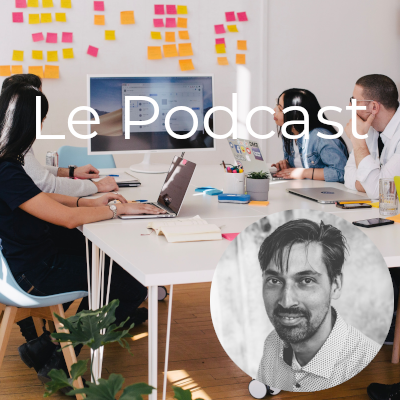
In this episode of Le Podcast on Emerging Leadership, I had the pleasure of welcoming Bart den Haak to explore OKRs from a very practical perspective.
From startup practice to long-term learning. Bart is a software engineer who first encountered OKRs more than ten years ago in a startup context. Since then, he has continued to use OKRs across different environments and now advises companies on how to adopt them meaningfully. This long-term perspective makes the conversation especially grounded — we talk less about theory and more about what actually works.
Revisiting the foundations. Building on a previous episode where I shared an approach to creating great goals using OKRs and Impact Mapping, this conversation goes deeper into the fundamentals: what OKRs really are, how they differ from MBOs, Balanced Scorecard, Hoshin Kanri, or 4DX, who can use them, and where to start. Rather than treating OKRs as a one-size-fits-all solution, we explore how context matters.
Learning zones and common pitfalls. A key part of the discussion focuses on learning. Bart explains how OKRs can help teams step out of their comfort zone and enter a learning zone, while avoiding the danger zone where pressure and fear take over. We also discuss common pitfalls: turning OKRs into performance evaluation tools, confusing activity with impact, and setting goals that are either too safe or too vague.
Resonance with practitioner leadership. Bart's approach resonates strongly with me and aligns closely with the ideas I explore in Changing Your Team From The Inside and I am a Software Engineer and I am in Charge. The underlying idea is the same: leadership is a practice, and tools only work when they support responsibility and learning.
OKRs don't create clarity by themselves. People do.
In this episode, we discuss
- •OKRs as a learning practice — not just a goal-setting framework.
- •Bart's ten-plus years of OKR experience, from startups to advising companies.
- •What OKRs really are, and how they differ from MBOs, Balanced Scorecard, Hoshin Kanri, and 4DX.
- •Who can use OKRs: individuals, teams, or entire organizations.
- •Where to start when introducing OKRs — and why context matters.
- •Comfort zone, learning zone, danger zone — using OKRs to enter the learning zone.
- •Common pitfalls: turning OKRs into performance evaluation, confusing activity with impact, goals that are too safe or too vague.
- •Why OKRs don't create clarity by themselves — people do.
References mentioned in the episode
- Original blog post — OKRs in Practice
- Moving the Needle — Bart den Haak
- A free email OKR course with Bart
- Other goal-setting frameworks discussed: MBOs, Balanced Scorecard, Hoshin Kanri, 4DX.
- Changing Your Team From The Inside — Alexis Monville
- I am a Software Engineer and I am in Charge — Alexis Monville
 Castbox
 Amazon Music