 Listen on Spotify
 Apple Podcasts
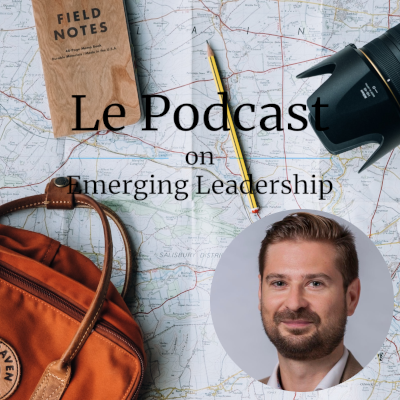
Jeremy Brown is Chief Product and Technology Officer at Traveldoo, a subsidiary of Expedia Group. An engineer by background, he has worked across operating systems, large-scale Java, pre-sales, sales, and even co-founded a startup incubator in Cameroon.
With Alexis, he opens up about leading a travel-tech company through the brutal shock of the pandemic — the human cost, the shift from office-first to fully remote (and then asynchronous), and how leading when the context is not yours to control reshapes you as a leader.
"The leader is the person who climbs up the tree, looks out over the forest, and points you in the direction where you need to go — and, more importantly, explains why we're going there." — Jeremy Brown
In this episode, we discuss
- •Leading a travel-tech business through the brutal shock of the pandemic.
- •Why it's much harder to lead when you don't control what makes things hard — and why you grow anyway.
- •Leadership = direction with a 'why', plus being human and self-aware.
- •From office-first culture to fully remote, and then nudging toward asynchronous.
- •Hand signals, explicit invitations, and other small mechanics that make remote meetings more inclusive.
- •Long-term rewards: investing in people, language spreading, metrics moving.
- •Belief as a top strength — and what drains energy when others don't share the why.
- •Continuous recognition over big awards ceremonies.
- •Practical advice to grow as a leader: know yourself, choose your environment, seek challenge.
References mentioned in the episode
- Original blog post — Leadership and Teamwork in a Crisis
- Turn the Ship Around! — L. David Marquet.
- Start with Why — Simon Sinek.
- CliftonStrengthsFinder and Kolbe — assessments to better know yourself.
- Automattic and Basecamp — references for fully remote, asynchronous-first working cultures.
Transcript
Alexis:
Hey Jeremy, thank you for joining Le Podcast. Can you tell us a little bit more about you and your background?
Jeremy:
Hey, Alexis. It's great to be here. So yeah, a little bit about me. I'm Jeremy. I'm Irish — actually half Irish, half Finnish. I live in Paris, where I've been for about five years. My background, I'm an engineer. That's been my history, but I think I have one of the most fairly diverse backgrounds for someone in my position. I've worked as an engineer on low-level things like the operating system of mobile phones, I've worked as a consultant doing very large scale Java implementations, I worked in pre-sales, I've worked in sales as an actual salesperson. With a friend, I started a startup incubator in Cameroon of all places and helped local entrepreneurs start tech businesses there 10 years ago. So really lots of different things. My background and my passion is about building products and the teams and the systems that build those products.
Alexis:
Today you are Chief Product and Technology Officer at Traveldoo, right?
Jeremy:
Yes.
Alexis:
So it directly connects to your passion of building products.
Jeremy:
Exactly. Traveldoo is a subsidiary of Expedia. We've been changing how we work as well. The majority of my work has been a little bit less on the product itself and actually more on how we build the product and how we can change that in a way that has a material impact on our customers and our users.
Alexis:
As soon as we say travel in the current context, I need to ask you a question about the pandemic affecting your business and the way you work.
Jeremy:
Alexis, this past year has been one of the hardest that I've personally experienced on multiple levels. Obviously like everybody else, the pandemic clearly had an effect on our personal lives. We have a small child at home — he's less than two. In March, we were all at home and we were busy juggling him and trying to get on with work.
More than that, our business is a travel and expense SaaS business. We went from people booking travel where we were doing millions of transactions a year to 80%, 90% down on the previous year. So from a business perspective, we've had an extreme shock to the system.
There've been a lot of implications for us as a company and the product team. We've had to let go of contractors. Half of our team are contractors based in India, and we had to significantly downsize that team as well. The people cost for us has been really high, not only for the people we had to let go — and contractors I really saw as our own staff — but for the people who are still here with us, they've had to make a transition from being co-located in two different offices, one in Paris and one in India. They've also had personal challenges. When you're in one of the companies that's heavily affected by the pandemic, it adds extra stress and worry compared to one of the companies benefiting from the current situation. There are winners and losers right now. We're definitely a loser. So it's been hard.
Alexis:
I can hear that. It's always difficult to imagine what people feel about it. The business is impacted, but there's the big people cost. If you see people around you let go, it's always affecting you. You cannot just be satisfied of being lucky and still having a job. So, yeah, it's difficult to go to the next question.
Jeremy:
Well, all I would say is that this has been a test for all of us. While it's really tough, the growth in yourself — in hard times you grow more, just like you prune plants to help them grow in the next growing season. I feel like the one thing this has done for me is it's helped me grow as a leader. It's very easy being a leader when everything's great. It's much harder being a leader when things are not great, and it's even harder when you don't control a lot of the things that make it not great. I don't just speak personally for myself. I speak for my leadership team and what they've had to handle.
We also have customers who are struggling, because a large part of our business is with travel agencies. They've been even more heavily impacted than ourselves. We've been fairly fortunate. We've kept most of our staff from being furloughed so that we can continue to build the product. A lot of our partners are not in the same situation. So it's been an interesting learning and growing experience — not one you would choose to ever go through. But I'll take it because, first of all, you don't have a choice. But secondly, I do see the positive growth in myself and the others around me through all of this.
Alexis:
That's really bringing me to the next question about what does being a leader mean to you?
Jeremy:
I was actually thinking about this question when you sent me some of the questions you might ask beforehand. For me being a leader, there's a couple of parts. I believe there's a big difference between leaders and managers. A leader is someone who, if you think about trying to navigate through a forest, is the person that climbs up the tree, looks out over the forest, and points you in the direction where you need to go. I would expect leaders to have a clear vision of where we are going, and perhaps more importantly, explaining why we're going in that direction.
The second part of leadership for me is really about being a human being. I've always believed this very strongly, and it's become more important through the pandemic. Not being disconnected from people, but really showing you're not perfect and not painting a perfect picture of yourself, being human and looking into how your people are doing and coming alongside them. We've had people that have overworked. They're at home, and the lines blur between work and home. You can really start to see the stress build.
The two parts of all this are showing that you yourself are having the same struggles as everybody else, and providing space for people to manage the extra complexity that everybody's currently managing. So leadership for me is about direction and explaining why that direction is important — and being human. The one thing I've learned in my journey, and I'm far from perfect, is that the breakthroughs as a leader come where I've gotten to know myself more. The more self-aware I become, the better leader I become as well.
Alexis:
It's very inspiring. Being self-aware, being human — that's not the first thing all the time, and I think it's really important. I feel that the people around me are more and more aware of that and are more and more ready to be themselves and to be a real person in their work environment. I see that as really a positive evolution of the world.
Jeremy:
I agree. It's a world I want to be part of. As work changes, creativity and collaboration are actually the things that we want to encourage in the workplace in order to really bring value to the businesses we work in. This is the kind of leadership that people respond best to, to help people be inspired to bring their best and do their best. So for me it goes together with the nature of work changing — the nature of leadership has to change a little bit too.
Alexis:
I think the kind of leader that was more of a manager, that was showing the artifact of success — a big car, a big watch, the nice clothes, inspiring respect through that — that's already gone. That's not the kind of person people are ready to follow now. It's interesting that shift that is happening.
Jeremy:
Yeah. And because we're not all in the office anymore, it's harder to flex like that. It's just you in your home with a camera. You can't flex in that same way. When you're in the office, there's all sorts of power that happens — the bad micromanagers come out still — but this new way of distributed work doesn't really facilitate people to do that either.
Alexis:
Speaking of offices, I remember a passionate conversation with you about how to assemble the team in a space, designing the space to make collaboration happen. I assume that your way of working changed from co-located, as you said, to fully remote. How did you change those things to still foster that creativity and collaboration?
Jeremy:
When I worked at Red Hat before, Red Hat is pretty good with remote work. A large percentage of people who work there were remote workers. Though I saw my team face-to-face a lot, we did have a lot of face time. But here at Traveldoo, we had a team co-located in the office in Paris with a really office-first culture. Same thing in Kochi in South India. It was a pretty sharp change to not be in the office anymore.
The first phase of our transition was just replicating the way that we worked in the office, but with video instead of face-to-face. We were using Slack already, but I think we went even more into Slack.
Then we used the retrospective in the team. Everyone says they use retros — we do use retros, it'd be nice if we used them more at the same time. But we tried to learn. What we realized was, first of all, I started to hear in my skip-level conversations, especially with the tech leads, that they were in a lot of meetings and actually not able to code that much. We still have that problem today, but I think we're a little bit better than when we first left the office.
We started intentionally moving more and more things to asynchronous. If you looked at my calendar a few weeks after we had moved out of the office and then you look at my calendar now almost a year later, it's very different. We've moved basically all of our status reporting to asynchronous. We've reduced the amount of time we spend in meetings. We've intentionally cut repeated lead meetings and asked why we're doing them. We're moving more and more of what we do to even shorter form meetings. We had a release meeting where people would gather around at lunchtime and spend 15 minutes talking about the next release. Then that release meeting moved to a video call. And now today, it's moved to a Slack workflow. So it's fully asynchronous. It's incremental changes. We're moving in this continuum towards more and more written and asynchronous.
We're not there yet. You look at companies like Automattic, the company that makes WordPress. They're very well known for how they work. We're not there yet, but we're definitely nudging towards them, which is a very positive thing.
While our team size has reduced, productivity overall has actually increased. We surveyed our staff, and we have a healthy percentage — like 20%, 30% — of staff who would like to stay remote and even leave Paris. Another percentage say, 'I'd like to go to the office, but I don't want to be there five days a week,' which is what we had before. So we're really moving in a different way.
Alexis:
Have you noticed — companies like Automattic or Basecamp that are working fully remote and putting a lot of attention to written and asynchronous communication — they say it enables people who are usually more shy or more introverted to contribute better, and that it enables better thinking. Have you noticed a change in the contribution of people?
Jeremy:
I will say the extroverts still are the most chatty people on Slack. Their personality still comes through. Yes, we've seen that nudging. I don't think we're at the stage where Automattic are, but the one thing I will say is that video calls or chat and email are more inclusive if you operate using them differently. We've intentionally adopted a number of behaviors. In video calls, we've introduced hand signals to say 'I agree' or 'I disagree.' We've introduced a hand signal to say 'I'd like to talk.' We try to intentionally ask people who are not talking, 'Hey, I see you didn't really comment here. Have you got something to say?' I've always found that that question generates the most powerful insight in the meeting. So through the retros, we've introduced more behaviors like that.
It's not as easy to do that in real life because the extroverts dominate that much more. You sense the body language in a room, but it's still pretty inclusive, and through this, we've become more inclusive. Maybe if we go back to the office, we'll have learned from that and still be like that. It seems weird to hold your hand up in a room and to stick your thumbs up in a room, whereas on a video call that feels natural now.
Alexis:
Yeah. I remember the first time I had a workshop using sociocracy or the core protocols. You're asked to make hand signals in the meeting room and not talk to signal your agreement to a proposal. It's really odd. It sounds counterintuitive, but at the third round of the table, it starts to become more interesting, because you are already focused on what people are saying. You look around, you see the hand signal, and suddenly you catch the opinion of people you would have probably not even noticed before. I'm curious about what will happen when we are coming back, once we learned those things remotely.
Jeremy:
Me too. I'll tell you the one thing that I'm looking forward to when we can see each other — is to see each other. We do have little coffee conversations, and we realized at times that some of the middle management were getting more and more disconnected in different departments. They have regular coffee hours together, which has worked out well. For me, the hybrid approach where you charge up your face-to-face time and you get that small talk is super important. Even where teams are fully remote in the future, I intend to have regular face-to-face time for those teams because I think it's important.
Alexis:
Absolutely. Companies like Automattic and Basecamp have face-time events when they gather all together. So there's a need for that, definitely.
Alexis:
We spoke about leadership and what it means. Who do you look up to as a leader? Where are you inspired from?
Jeremy:
There've been a couple of different books I've read from different leaders that have inspired me, and maybe even more than 'nudge' — really kicked me in a direction. I would say David Marquet and Turn the Ship Around! has definitely altered the course of how I try to be a leader. Simon Sinek has really transformed how I go into work — Start with Why and a lot of the thinking that he puts into work. He's certainly inspired what I feel is my personal purpose for what I want to achieve and how I turn up at work. There are probably a few others, but those are the two that instantly come to mind.
Alexis:
And what gives you energy?
Jeremy:
When I was a developer, you had these periods where you entered flow, and you could lose track of time. You were achieving something and making something, and you just felt so happy. As a leader, as a manager, you don't have that kind of creator schedule, that maker schedule. It took me a long time to feel reward and energized by some of that. Today, it's long-term for me. It's the investment that you make in people and the payoff that you see — three months later, a year later — when you made this change for the person, or you coached them towards a certain way of turning up at work. Then you see that paying off, or you have a one-on-one with someone, and they say, 'I did that thing that you said, and it just worked so well.' That's the big energizing moment for me now.
I accept that they're not every day. Also, in nudging an organization over a period of time, as a leader you feel you're repeating yourself over and over again, saying the same things. There are two rewards. One is that the language that you insert into the situation to try and nudge things starts to be repeated by others — the same terminology you introduced. The second is you see the metrics that you use to track how we're doing actually significantly changing. Those are also super rewarding and energizing.
Alexis:
I have a question about, of course, what drains your energy — the opposite side of that coin?
Jeremy:
One is toxic people, and maybe also people that no matter how much you invest, you can't seem to get them to see the world differently or to change. It's frustrating for me because I feel like there's probably a way to nudge everybody forwards into a different way of behaving. There's a level of frustration in me.
I'm a big fan of the CliftonStrengthsFinder and the idea of each of us having unique strengths in different orders. My number one strength is Belief. What that means is it's actually an execution strength — if I believe in something, I'm going to go after it with all my energy and passion. One of the things that kills that and drains it and creates bad behaviors in me is where I feel like people don't get why I'm so passionate about that thing and why they should also be passionate about it. That really drains me a lot.
Alexis:
I think if you form a club on that, I would join happily. You are not alone with that kind of frustration and a belief that we could all get to somewhere, find different ways to change our mindset. Sometimes you don't find the way, and it's frustrating.
Jeremy:
When you're energized like that, you want everyone to move fast. The fact that it's not moving as fast as you want is part of that frustration. But then you get these payoffs, and boom, you're back in the game — yeah, we did actually make progress. It wasn't as bad.
Alexis:
Sometimes you need the feedback from others saying, 'No, you don't remember how it was six months ago. You don't realize the progress we made.' You say, 'Oh, okay. Yeah. That was nice.' You need to do that every six months — a small paragraph like this will really help me if you can continue, maybe add it to your calendar 🙂
Jeremy:
I've tried very hard to build a culture where we speak out those things more. It definitely energizes people, not just me. To call out and say thank you and to call out those little wins, repeatedly. We now have weekly updates with that built in. We have a biweekly all-hands within the product and tech team, and we spend probably 15 minutes of that meeting just thanking people — different call-outs for the last week, last two weeks. As you build that — and we've only been introducing more and more of it in the last six months — you start to see it popping up more and more, and then you get a few compliments yourself, and it's rewarding.
Alexis:
It's incredible the impact that it has. It's difficult at the beginning, but I like that way of celebrating. I feel that the regular celebration close to when the event happens is really more efficient than the big awards ceremony.
Jeremy:
Exactly. I personally hate big awards ceremonies because you always have to give awards to some people, and you can't give it to all the people who really deserved it. I'm really anti those. I prefer the continuous call-outs and encouragement than plaques and awards. At least that's my personal, relatively strong belief. If I was leading an organization, I definitely wouldn't have something like that.
Alexis:
Is there something you've always dreamed of doing but never dared to?
Jeremy:
Difficult question. I've taken quite a few risks in my career, and I did start a company already. But I'd like to start another company. I'd like to build a real business from scratch or acquire one and really build a different kind of business — one that stands for different things in society. I'm very energized to turn up to work to do that. When you run a company, you can really shape it in a different way. Ideally more in the sense of Basecamp or folks like that, where they don't have to do something specific for their VC funders. They can really grow the company at the pace that they believe it should grow at. That would be the thing.
Alexis:
This is nice. I love it. I hope you will.
Jeremy:
Oh, me too.
Alexis:
Apart from work, is there something that you're passionate about that you want to share today?
Jeremy:
I'm a geek. I'm passionate about lots of things, and probably like maybe a lot of men, my obsessions change from time to time. I do like to get out on my bicycle and go cycling. I really enjoy cycling. My partner and I are very fortunate also to have a son, and he's just about to turn two in a couple of months. My passion has shifted being a father. That's where a lot of my energy also goes, and probably why I'm doing a little bit less cycling these days as well, apart from just the pandemic. In the lockdown in Paris, we had a one-kilometer radius from your home. So cycling wasn't really a thing you could do so easily.
Alexis:
What would be your advice to people who want to develop themselves as leaders?
Jeremy:
A lot of people who aspire to leadership — getting to being a manager of people is something that they can all achieve and be entrusted with managing a team. There are clearly certain skills that are needed for that. To really push through, to break through up another couple of levels, there's a bit more that needs to be developed. It goes back to what I said earlier: knowing yourself, going deeper in yourself. I highly recommend people to take some kind of tests, like the CliftonStrengthsFinder, and there's others like Kolbe and a few others. Often people's work will pay for those. If one doesn't really work for you, try a few, but use some of those tools.
Being in the right environment, having the right people around you, is super important. If you're not getting that in the environment that you're in, change it. Find people that are going in the same direction as you and passionate about that, because we take each other on the journey together. You're not going to really be tested in going deeper in yourself without other people willing to challenge you. In my current team, there are people who have challenged me on my behavior, and that's helped me grow.
In the kind of executive world, you definitely have to be able to deliver results. The good kind of execs do that without people paying a price — taking people with you. Second is just managing the relationships with execs of other departments that are not directly related to yours, managing the politics. Those are critical skills, but you can develop them at every level of your career. It gets a bit harder the more senior you go. Often people get a bit stuck at a certain level. The breakthroughs come when you're willing to move a little bit, to change jobs, to get those experiences and get the right people around you, or even to fail and then move again and try again. So that would be my advice.
Alexis:
I love the advice.
Jeremy:
Thank you.
Alexis:
Very tempting advice. I hope that people will be appealed to that — knowing yourself and looking at your environment, looking at if the people around you are helping you to grow. It's a really good one. Love it.
Jeremy:
My parents taught me that, Alexis. I just hear their voice at the back of my head when I'm thinking that. I definitely learned that from them.
Alexis:
Excellent. We learn all the time, and sometimes you remember the things we learned are coming from a long time ago. It's really good.
Jeremy:
Exactly.
Alexis:
Thank you very much, Jeremy, for having joined the podcast today. I really appreciate your time and your insights. It was really beautiful. I'm really glad that we had that conversation. Thank you.
Jeremy:
Thank you, Alexis. It's been a pleasure. I've been a long-time listener of your podcast, so it's great to be here. Please keep going with the podcast. It's great.
Alexis:
Thank you for listening to this episode of Le Podcast. Go to alexis.monville.com for the references mentioned in the episode, and to find more help to increase your impact and satisfaction at work. Drop a comment or an email with your feedback, or just to say hello. Until next time, to find better ways of changing your team.
 Castbox
 Amazon Music