 Listen on Spotify
 Apple Podcasts
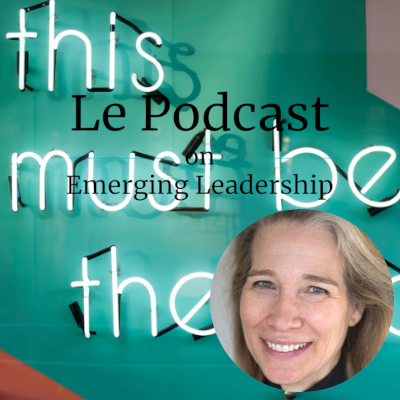
Lucinda Duncalfe is a serial entrepreneur who has founded and led multiple venture-backed technology companies over 25 years. Her latest, AboveBoard, is an inclusive hiring platform focused on executive and board roles.
With Alexis, she explores the overlap between hiring, diversity, and the top of organizations — the practices that quietly reduce diversity, why "it's just the pipeline" rarely is, and how to assemble a leadership team that genuinely outperforms.
"Being a leader is about setting out a future for people and then bringing them together to reach that future." — Lucinda Duncalfe
In this episode, we discuss
- •Why diversity at the board level drives better business performance and more holistic decisions.
- •Why 'it's a pipeline problem' usually isn't — and the hiring practices that quietly screen people out.
- •The job description trap: how too many bullet points create the pipeline problem you complain about.
- •Moving from CV-based hiring to competency-based assessment.
- •Building a leadership team like a stew: complementary skills, personalities, and perspectives.
- •'I don't want special treatment' — why fairness, not handouts, is what top performers ask for.
- •Why diversity should be part of the bar, not a trade-off against it.
- •Mentoring as a network of relationships rather than a single mentor.
- •Intentionality as the foundational habit that separates leaders who grow from those who sleepwalk.
References mentioned in the episode
- Original blog post — Hiring and Diversity Without Dropping the Bar
- AboveBoard — inclusive hiring platform for executive and board roles
- Conscious Capitalism — community of CEOs around purpose-driven business.
- Earlier episode with Allyson Kouao on diversity, equity, and inclusion.
Transcript
Alexis:
Hey Lucinda. Great to have you here. Can you tell us a little bit more about you and your background?
Lucinda:
Absolutely. It's great to be talking with you today, Alexis. So I am what is known as a serial entrepreneur in the tech world. I have founded and/or led a number of venture capital backed technology companies, high growth firms. I started doing that when I was quite young and I've been doing it for 25 years now. My most recent company is one that is called AboveBoard, which is an inclusive platform for hiring at the executive and board level.
Alexis:
Excellent. Thank you, Lucinda. Inclusive platform. That means I will be able to ask you questions about diversity and hiring? Right?
Lucinda:
Exactly. That's the world I live in, is the overlap between three circles in a Venn diagram: hiring, the executive and board level, and diversity. Exactly.
Alexis:
Why do you think it's important to start at the board level?
Lucinda:
When I was younger, I probably thought that sort of power to the people and you can change things from the bottom up. And I still do believe that you can do that. I'm a little older and wiser now, and I know it's actually a lot easier to change things from the top. So if we start at the board level that then will flow down through the organizations. I have a very deep belief, which is backed by data, that first of all, companies that have more diverse boards of directors have better business performance. You get a diversity of perspectives, you'll tend to get a better answer. You'll have a board that tends to look more like your customers, and therefore you'll align the company better with your customers.
Also, if you turn and look down the other way, if we think about legacy, I have a very strong belief that diverse boards of directors make more holistic decisions. And that ultimately is better for the world. I'm an American. I went to business school, I'm a capitalist. The reality is the way businesses operate is one of the most powerful drivers of what we do in society. So to the degree we can increase diversity, we'll have more perspectives, the board will have better performance, and we'll also have boards that are making better decisions in terms of the world and our society on it.
Alexis:
That reminds me of a conversation I had with the leadership team that was in engineering and software engineering. As you can guess, the diversity we had in our teams, it was not great at all. We were discussing in the leadership team about diversity and basically one of the members of the team said, 'We are doing nothing wrong. That's just how it is.' And I said, 'Okay, so we are all white, all male, and we are doing nothing wrong?' So how do we expect the situation to change?
Lucinda:
Yeah, I mean Alexis, the last company I ran was a large software company. And when I first joined as CEO of a more mature company, we had the same exact symptom, the same exact situation. I've heard the same exact thing from the team. 'It's a pipeline problem, this isn't anything we're doing.' Well, when you dig into that, I'll give you two specific examples of what the team was doing and it was ineffective. One was that a question in the wrap around a candidate, so we're sitting around and talking about them, was 'Would you like to have a beer with this person?' Well, how is that relevant to what they're doing in their work? It was about comfort. And as humans, we tend to be comfortable most with people who are most like us. So we were screening out great candidates there.
The second, which is maybe more subtle but I think actually maybe even more damaging, is part of the interview process was a live code test. Literally here's a problem. Let's code it together on the whiteboard. What was happening there was there were certain cultures where that was just difficult. The showmanship required, the instantaneous response versus folks who maybe were even better problem solvers in a more thoughtful, quiet way. So we changed those two things and it did start to change. The biggest challenge once those two were knocked down was that candidates who weren't straight white males came and saw the team and got the implicit message, 'Oh, this company is not for me. Not only is there no one here who looks like me, there's no one here who is different at all.'
And so then it got to be hard to hire them, to actually get offers submitted. The way we handled that was, I just had personally very candid conversations with them. If we got a candidate who would add some diversity to the mix, I would literally reach out to them and tell them here's what the deal is, and we're completely committed to this, and we got a couple of them over the hurdle that way, and then it took off. But it's very challenging and it starts with the recognition that there's a problem.
Alexis:
Yeah. I think that's a really big thing in our world is that we have a problem. It's not that we are doing intentionally something wrong, but in reality, we are doing something wrong.
Lucinda:
Exactly. And that's a typical human thing. In leadership, you have to be careful because people feel badly about being accused of doing something wrong. So it's more about diagnosing the process or the culture and depersonalizing it so that people are more open to looking at it in a different way.
Alexis:
I had a really interesting conversation with one of the talent acquisition partners I was working with. I was hiring for a position and a tendency, usual tendency — laziness — I asked for the previous job description for that position. I started from that page that was not blank. That was more comfortable. I discussed with the talent acquisition partner that was working with me, and I explained what I wanted in terms of inducing more diversity in our teams. She looked at the description and told me, 'Okay, there's a few things that you need to fix.' Of course, I was thinking about the gender on things and I said, 'There's nothing on this.' No, there's a problem. You have eight bullet points in the requirements. That will never work. You will only have one type of people that will look at that list and say, 'Oh yeah, I'm covering two of them. I'm good.' But you will miss all the others. So you need to be already careful with that.
Lucinda:
That's right. We see that over and over again. We actually see it in the statistics on AboveBoard itself: women and underrepresented minorities will only apply for a job if they have every single one of those bullets, whereas men will generally look at it and say, 'Oh, I have two of those. I can do this.' So you're setting up a pipeline problem for yourself that way.
Alexis:
Yeah. So I was already impressed of that. So in what you are doing with AboveBoard, are you also advising your customers in changing those kinds of things?
Lucinda:
Yes, we are. There's a few things that we're doing. One is that we're pivoting away from a typical CV and towards an assessment of capabilities. If you think about it, you're looking for people and in our world, for example, they've been at Google and Facebook and you think, 'Oh, perfect. These people are awesome.' But the reality is you don't know how good they were at Google or Facebook. What did they actually accomplish? If you instead frame the need in terms of competencies — what do I need this person to be able to do? Not what places have they worked, or what roles have they held? But rather what have they done at those? What competencies have they grown and shown? Then you can change the conversation downstream so that people start to interview or use other assessments against that specific set of competencies. That's our long-term goal: to be able to map competencies against roles, assess competencies for individuals, and then be able to match the two.
Alexis:
So it means in the interview process, the customer will have to work on himself or herself to make sure that they are assessing for one competency and they are looking for examples, illustrations, of how those candidates demonstrate those competencies.
Lucinda:
That's exactly right. You're asking all those same when-questions. You're asking those questions against a very specific list of competencies that you're looking for.
Alexis:
Yeah. I really try to do that now, but I have to admit that for a long time, that was just a free flow conversation. And I enjoyed the conversation with some people that was leading to more interesting questions. At the end I had a good time and I was really happy with that candidate. For other candidates, the first 15 seconds, I knew that I did not want to work with those people and I was done.
Lucinda:
That's right. That's just, really, honestly, a more sophisticated version of the 'would you like to have a beer with them' approach.
Alexis:
Exactly. Yeah. That's how to fight your first impression that could be really good or really bad, but you don't know nothing about the person if you stay on that first impression.
Lucinda:
Exactly.
Alexis:
It's interesting. So you work with a lot of leaders. You've worked with a lot of leaders in the past, and you are working currently with a lot of leaders. What does being a leader mean to you?
Lucinda:
Oh, this is such a big question, and books and books and books written about this question. To start with what being a leader does not mean to me: it's not about authority. It's not about a title or a position in an organization. Being a leader is about setting out a future for people and then bringing them together to reach that future. So it's about how do we motivate and organize? How do we create the structure within which people can be successful? It's about being a pace setter.
I sometimes use the analogy, in the world I live where speed is of the essence, I talk about driving — I will admit I maybe drive more quickly than I should, but I always feel like I'm in more control when I'm going a little bit faster than everyone else. It's because I'm able to lead. I'm able to set a path through the traffic versus sitting and following somebody else. There's always an interesting conversation about what's leadership and what's management. I think they're quite different. Someone can be a great manager and a poor leader and vice versa. I would say that I was a better manager when I was earlier in my career, and I'm a better leader now that I'm later in my career. So that's what I think it is. It's about how do you bring people together to drive towards a future that you've envisioned.
Alexis:
Excellent. And when you build a company, I think you have to assemble different leaders that will form that company, that will drive that company. How do you form those teams? How do you assemble those characters together?
Lucinda:
The first thing, which is not particularly interesting, but it is the first thing, is hard skills. You're putting someone in a role. Do they know how to do that? Do they have experience? Back to the point I made earlier, the competencies — have they proven competencies in terms of how you manage a function? Because in corporate life, you don't get to just lead. You have to manage as well. So that's table stakes. I then think about it always as a stew. To make a stew, we're going to need a variety of ingredients. You keep adding the same thing, it's going to be pretty boring. So I think of it in terms of, because it starts with me typically as an entrepreneur, what am I missing?
A really concrete example: the way you and I first met was because I was looking for a chief of staff. The reason I was looking for a chief of staff is that I am very, very good at big picture, at visioning and strategy. I'm good at selling. Really not so great at making the machine work. I needed someone who was balanced to me, who could do those pieces. As you add more people, the list gets more comprehensive and you start to look for adding different personality types.
Adding some people who are more run-and-guns, some who are much more thoughtful. You want some people who are sort of extroverted and are going to celebrate, and other people who are the ones who are going to be constantly looking for what's wrong and how to improve it. What you're doing there is really thinking about diversity in all of its guises. It is completely true that someone who is a different gender or ethnic background, they are de facto going to have had different life experiences and bring something to that stew. That's one of the many dimensions that you're looking for, how the pieces fit together.
The challenge with that is to balance it with a foundation that is commonly held. The way I think about that is value set. In the case of AboveBoard, you want really clear mission alignment. You have to care about what we do, it has to be important to you. And then values like integrity, like quality. You have to have a set of people who have these core things in common so that you can all work together, and above that bring very different things — soft, hard, personality skills — so that you can get the maximum possible packed into a leadership team.
Alexis:
Excellent. This is really an interesting job to do, to balance those different aspects.
Lucinda:
It's so much fun. This is really my favorite thing. There's more art to it than science, but I do think there's science to it. I will literally, as I'm building a team, make a table that has the people or the open functions across one axis, and the other axis is the things that I think are most important to this business in terms of the softer side. I won't hire anyone who I don't think is at the very top of the game in their function. Once you have that, what are the other things I'm looking for? And try to spread the check marks in the boxes in that table, across the team. So you want someone who's more of a rah-rah person and someone who's more risk averse. You're looking across each one of those and making sure that somebody is filling that box in.
Alexis:
Yeah. So that means that you are really looking into it consciously, and looking at the gaps that you want to fill, not only on skills, but also on personality types. That's really interesting.
Lucinda:
And I think actually that dovetails into a discussion about diversity. I spend most of my days talking to people about this and how to actually action adding diversity at the most senior levels. One of the things that is very difficult for the folks who are the driving — the straight white middle-aged males who hold most of these positions today — they will often say to me, 'Well, I don't want to drop the bar.' Which, candidly is a little insulting. This presumption that in order to add someone who's not that is going to drop the bar. Why would you make that assumption?
The second thing that I really try to get people to think through, at least as a challenge, is why is bringing some piece of diversity not part of the bar? Why is that a separate thing? If you were making a stew and you already had meat, would you go get more meat? Or would you add some vegetables or herbs? You'd want some vegetables or herbs to make a stew better. The requirement when you go to the grocery store isn't the best possible grocery. It's the best possible carrot or the best possible thyme.
If you start to think about team construction in the way I described, diversity is one of the axes that you need to think through because different people bring a different perspective, and that's additive to the entirety of the team. It makes the whole team better because you're going to have more valuable perspectives in the room. You're therefore going to make better decisions as a team. Whereas adding one more person who doesn't have that, they're going to be helpful in terms of hard skills and whatever else, but they're not going to add something that's going to lift the rest of the team up as well.
Alexis:
Exactly. This is very, very important. About dropping the bar — that comment — I did not realize one time that when we were looking at a female engineering leader in the organization, we were lacking females at all levels, but especially after a few years, we were seeing really a gap in leadership. There was something missing. It seemed that we were losing the female software engineers before they were going into a leadership position either as manager or as individual contributor. That was really concerning. We were trying to understand why. I told one of them that was in a leadership position that we should encourage and help them and so on. And she looked at me and said, 'I don't want a special treatment.'
Lucinda:
Yeah, that's right.
Alexis:
And I was really struggling with that thing. I think it's not a special treatment, but if I'm not giving you a special treatment, what am I doing? She looked at me and said, 'I just want all people to be treated fairly.' And if you look at it, why people are leaving — they are leaving because they feel they are not treated fairly. The others have promotions before them. They think it's unfair. They are okay to wait for one more year, and after some point they leave because they think their future is somewhere else.
Lucinda:
That's right. Alexis, this is one of the most critical things for people to understand: the very best performers, the last thing they want is a handout. They don't want to have a job because they were the best Black candidate. They want a fair shot at the job as the best candidate. What you're seeing today, at least in the US, is there is such a focus on this topic after the murder of George Floyd in particular. The best performers are allergic to being hired in because of a program or that sort of thing. It's the downside of quotas. Now, I think there's a place for quotas.
If you look at what's happening in some European countries and California within the US, on boards, as there are requirements to have a certain number of women, that breaks it open. In a case where the numbers are so terrible that's probably the only way you can start, but I sure hope we can drop them soon, and realize that you just want the best directors, and 'Oh, women actually bring something special to the table.' So it's completely fair and right to consider the special thing that they bring to the table. What we don't want is to be brought on only because of that. It's a little bit of a duality. You have to keep both of those things in your mind at the same time.
Alexis:
Exactly. But I think that's really an important point. I spoke about leadership and I'm curious, what do you look up to as a leader or learn from, are inspired from? And why?
Lucinda:
This is such a hard question to answer because it's so many people in so many ways. The first thing I would say, and I think this is really valuable, maybe for other people as a way to think about this, is I don't look at a single person and say, 'Wow, that's the leader I want to be.' Instead, I look at people and I'll talk about them and think about something specific that they do that I want to emulate or learn from. I think that's really important because you can only be an authentic leader if you're yourself. Every one of us is completely different. So we can't copy who somebody else is as a leader and be successful. Rather, we need to look at them and say, 'Oh, that is a fabulous way to do that, or approach, or attribute. I want to do that.'
It's not really that I look to any one person. It's rather what I've learned from so many through the years. One that comes to mind is a man named Carl Moreno, who was early in my career, I was probably in my late twenties. He was a leader within the company I was working for. I was working in a financial services company and he was at the time general counsel and then moved over into other roles. What I learned from him was about clarity and trust. He was great at being really clear with what we were trying to get done. I don't mean that in a very tactical way. I don't mean in terms of goals. More on a strategic level: here's what we're trying to do, here's how it fits in, and then supporting while letting me and others run free.
We ended up getting this alignment, getting the very best from people, because we were so excited about where we were going and we felt both trusted and supported. Sometimes people tend to either throw somebody in the deep end or micromanage. The trick is how do you give people the free reign to be their very best, while at the same time knowing that you always have them as a backstop.
And then I pull other pieces out. One that I've been really thinking about recently is Martin Luther King, specifically for his prowess in public speaking. There's a style and a drive coming out of the Black church in America that I look at and think, how do I inspire people to be willing to think about this differently than they have before? How do I support the people who are our members and simultaneously change the minds of people who I think should be hiring these people?
One other story I wanted to tell. I'm a member of a group called the Conscious Capitalism Group, which is about why it's good from a pure shareholder perspective and how to think across more than just the shareholder perspective. It's mostly big companies, CEOs, and I was originally invited as 'let a few venture-backed kids come.' There were four of us and we show up and it's the CEOs of fortune 100 companies. We're sitting at a table and felt like we were the kids' table.
There was a guy who had come in as CEO of Home Depot, who talked and gave the story about how he came in. The organization at the time when he came in was really in trouble, super dysfunctional. He started off making all these changes. He'd spend his day having meetings with sets of people and making decisions and moving to the next thing. He was very open about the whole thing. He felt like he was doing this great job because he's making all this change and driving through. He had a director working with him on these things, young and post-MBA kid. They had one of these meetings, they're maybe six weeks in, the meeting ends and the kid sticks his head back in and says, 'Can I talk to you for a second?'
He said, 'Sure.' He's sitting at his big desk in his big office. The kid looks at him and said, 'You are really screwing this up.' Taken aback he said, 'What do you mean I'm screwing this up? I think I'm doing great.' He said, 'You're managing 250,000 people. You make these changes at your level. You're making six of them a week. They drive all the way through to the floor level in the stores. The poor guy who's stocking shelves, one day it's this, then it's this, then it's this — it's too much. You can't manage a company like this.'
It so impacted me. First of all, here's the 60-plus-year-old white guy. It was the first time I ever had interacted with a CEO who I did look up to and think, 'Oh, I want to be like him.' He's not demographically like me, but he had the same value set — authenticity, openness, drive. I just thought I could be that.
The second thing was his authenticity. Here he is in front of a pretty big deal audience of his peers, telling a story about this kid being the one who gives him the feedback. And having established a culture where the kid felt free to do that. As a CEO, you tend to get in this bubble, and as much as you want feedback, people don't give it to you. So thinking about how he did that and how you manage people and interact with people in a way that they'll give you the real feedback. And then very tangibly, it was a big lesson for me in terms of the difference in pace in an organization.
Alexis:
Really, really great example. I'm making the connection with what you said at the beginning with the competencies, because what you are looking at, it's really how those people behave, and what kind of specific things they have that you want to emulate and would want to learn. That makes me think about mentoring and hearing regularly that people should have a mentor, or should mentor others. I'm thinking that it's more a network of mentors that people should have. What are your thoughts about mentoring?
Lucinda:
Yeah. I think what you just said is exactly right. You need people who will help teach you different things at different stages, have different perspectives on you. I used to say I didn't have any mentors. I had a model in my head of a person who takes you under their wing and teaches you. I really never had that. On the other hand, I had many people who taught me really important things and were supportive and helpful to me. Those change over time, because you grow, the situation changes, and they need to be different.
Those kinds of relationships are very important for both people in them. It typically is really fun for the mentor to have an impact, to pass on what you know, and impactful for the mentee. I've never been in one of those formal programs. I don't have a sense of whether they work. My guess is it's a little hit or miss. Great when it does, there has to be some personality match. So maybe it helps to drive those, but certainly they're fun for the mentor and incredibly rewarding for the mentee. Yes, I think you need a whole set of people through a career.
Alexis:
Yeah. Thank you for sharing that. My other question would be the kind of advice — if you had one advice to give to people who want to develop themselves as leaders, what would that advice be?
Lucinda:
By far — and this is the advice I try hard to give to myself all the time — intentionality. What separates people who are really successful (by which I don't necessarily mean making money or whatever — being successful is accomplishing the things that you want to accomplish, including things like a balanced life or whatever it is) is being intentional about what they do. Too many people sleepwalk through life, they just sort of take the next thing that comes. If you decide that's how you want to live your life, that in fact is being intentional. But in a professional environment, think about what it is you're trying to do. Think about what it is you're trying to do for your organization, for yourself. I take this probably to an extreme. I walk out of almost every meeting, unless I'm really, really rushed, and think, 'Okay, how could I have done that better? What went well, what didn't?'
I look at my calendar for the week and have an intention about what I'm trying to do this week, and do maybe something very tangible, like 'I want to close that deal,' or it may be really intangible, like 'I need to get more space for thinking strategically,' or maybe I'm feeling tired, I better back off some this week. So it's about being very aware of what you're trying to do, setting that intention, acting deliberately against that intention, and then assessing whether you accomplished it or not. I think that is the foundational difference between people who succeed, more or less.
Alexis:
It is excellent. I think I will reuse that way of explaining that. I love it. I'm wondering what are the things that are really giving you energy, and what are the things that are draining your energy?
Lucinda:
I will share this. Especially if I was doing sort of an in-person talk, I'm pretty high energy and people often assume that I'm an extrovert, and I am absolutely not an extrovert. I'm an introvert. I love those sorts of environments. I really love working with a team of people that I know. I get energy from that, but ongoing interaction with humans is actually also really draining for me. When I think about what gives me energy right now, it's about the mission and purpose of what we're doing. If I'm on a sales call or a partner call, I get really amped up and excited. And then it also was exhausting. So it's a little bit of a yin and yang in terms of people both giving me energy and exhausting me.
The foundational drivers, the things that really give me energy is I love to build things and I love to see things come together. I get so much energy from that. The other thing I'd say that is apropos of nothing professionally, but I just love kids. Just being around kids makes me tremendously energetic. I live in New York City, and one of the things I love about it is that you're just constantly seeing kids and interacting with kids. I am a city dweller, so I know nature is supposed to be the key thing, and I do love nature, but I don't need that. Let me walk through the street. I will literally absorb the energy of New York City.
Alexis:
That's a very good one. I love that. And that can resonate with me a lot. That's always difficult for me to admit, that as interacting with people, I already like that, I like the exchange of ideas and working with them, but at some point I need some time for myself.
Lucinda:
Exactly. Enough, enough. I need to unplug. And it never fails. A startup, it's such an intense life, so many hours. It never fails when I sort of just find 45 minutes in the middle of my day to do whatever, and somebody calls me. And I always answer. Not always, but almost always answer. And I'm always fine afterwards, but it is funny how, as one of the things as a leader, you have to give of yourself. You have to be willing to — actually not just willing — want to give of yourself. That's one of the rare moments as a CEO when I'm like, 'Ugh. Okay. Now I have to do this thing.' Mostly I'm just energized by it. But sometimes it's a little much.
Alexis:
Excellent. Last question. Is there something you've always dreamed of doing, but never dared to?
Lucinda:
I wouldn't say never dared to. The closest I can get is I've yet to be to Antarctica. And I'd really, really like to go to Antarctica. It's just a time and priorities thing I haven't done. I actually think one of the things that I'm really lucky about is I have a pretty balanced way of viewing risk. I'll give you an example I use a lot: I learned to ski really late in life. I didn't start skiing until I was 48. And I'm a pretty good skier now. And yet, still, I get to the top of a hill. You know when you're at a very steep slope and you're standing at the top, if there's other skiers and your tips are just out over open space — from that perspective, it looks basically like it's just a straight drop. Of course it isn't, but that's how it feels.
I always stand there and think to myself, 'Oh, can I get on the lift and go back down? Is there another way to get down from here?' And then I think to myself — and this is the point of this story — 'Well, what's the worst thing that's going to happen?' Worst thing is I'm going to fall. I've fallen all the time. It's fine. And then I go. So I think about almost everything in life that way: what's really the risk? It's not hard to dare myself to do things when I think, 'Well, what's really going to happen?' I'd fail. Okay. I fail, I fall, or whatever. Which means I've been pretty lucky because most of the things that I've wanted to do, I've done.
Alexis:
It's really inspirational. I loved it. I love the way you end on that question. That was really great to have you on the show, Lucinda.
Lucinda:
Oh, it was so much fun to talk with you. Thank you for asking me.
Alexis:
Thank you for listening to this episode of the podcast. Go to Alexis.Monville.com for the references mentioned in the episode and to find more help to increase your impact and satisfaction at work. You can also check the episode with Ally Kouao for more about diversity, equity, and inclusion. Drop a comment or an email with your feedback, or just to say hello. Until next time, to find better ways of changing your team.
 Castbox
 Amazon Music