 Listen on Spotify
 Apple Podcasts
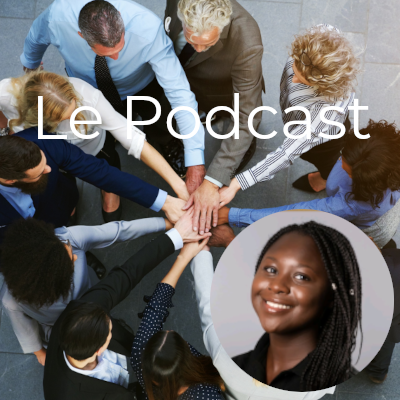
Ally Kouao is a developer advocate and solution architect at Red Hat, and the co-creator of the 14 Days to a More Knowledgeable You initiative — a daily program of articles, podcast episodes and personal stories from Black colleagues in the UK and Ireland.
With Alexis, she explores Diversity, Equity, and Inclusion as something that shows up in daily conversations, hiring decisions, and the small moments that shape belonging.
"When you ask that question, you may be prioritizing your curiosity over their feelings." — Ally Kouao
In this episode, we discuss
- •Why allyship is something you do, not a label you claim.
- •Educating yourself beyond what school curricula cover — recent and colonial history.
- •Belonging when you're a second- or third-generation immigrant: feeling outside on both sides.
- •Why the question 'Where are you really from?' prioritizes your curiosity over their feelings.
- •Unconscious bias in hiring — and a concrete practice: rewriting resumes to strip identity signals.
- •'Are we compromising quality for representation?' — a clear answer.
- •The recruiter experiment: interviewers rejecting their own early-career resumes.
- •Why we still need to celebrate underrepresented people reaching new levels — for now.
- •A reading recommendation: Girl, Woman, Other by Bernardine Evaristo.
References mentioned in the episode
- Original blog post — Belonging, Identity, and Better Hiring
- Girl, Woman, Other by Bernardine Evaristo — recommended reading.
- 14 Days to a More Knowledgeable You — Red Hat initiative co-created by Ally Kouao.
Transcript
Ally:
In that moment when you're asking that question, you're really prioritizing your curiosity over their feelings.
Alexis:
That's Ally Kouao, developer advocate and solution architect at Red Hat.
Ally:
Honestly, allyship means something different to everyone, and I think just having that shared understanding and that shared motivation to listen and to be there for the people who want their voices heard.
Alexis:
Ally Kouao explaining what allyship means. Diversity, equity, and inclusion are what we explore in this new episode of Le Podcast. Le Podcast equips you to make a positive change in your organization. Each episode turns insight into actions you can use straight away to build momentum and create lasting change — from yourself to your team, from your team to other teams, and from other teams to the entire organization. I'm your host, Alexis Monville, and I believe in the ability of people and teams to find better ways to increase their impact and satisfaction.
Alexis:
Let's jump right into the conversation with Ally to learn more about what it means. Hey, Ally. Can you tell us a little bit more about you and your background?
Ally:
Yeah, so first of all, thank you for having me on this podcast. I joined Red Hat back in 2019. Prior to that I was a software engineering student at a university in Wales. In terms of my personal background, I grew up in London. I've lived in London my whole life and moved to Wales for university when I was 19. The rest is history. I've been at Red Hat for just over a year now. I'm a solution architect on the Red Hat graduate program, and it's been a really good experience so far.
Alexis:
Excellent. I think I first heard about you because you ran a 14-day program, To a More Knowledgeable You. Each day resonated with me big time. Could you tell us the motivation behind the program?
Ally:
The main reason this program came about — aside from the fluctuating levels of COVID globally — was that it felt like there was a need to highlight the continued civil unrest that has been magnified after the brutalities and documented injustice in the US. What I thought was important to do, alongside one of my colleagues, was to make a point that not only is it possible for Black people located outside of the US to be affected by what's going on, but there are experiences shared by Black people and other minorities in their everyday lives that have frequently been glazed over.
Some Red Hatters and I came together and created an initiative we now know as 14 Days To a More Knowledgeable You. It provides a safe space to offer daily insight — through an article, podcast episode or personal story — into the realities of fellow Black colleagues, friends and family in the UK and Ireland.
Alexis:
What would you say are the main aspects of the program?
Ally:
What really brings the program to life are people's personal stories. We had a total of three personal stories from three different people who contributed to the initiative. It really brought things closer to home and helped people realize there is another person behind the screen, another person at Red Hat, who can relate to this. It makes it even more significant that these are personal stories in the UK.
Something I've heard throughout my life is that Black people here don't have it as hard as in the US. To an extent that's true regarding the brutalities, but in the UK there is so much more that happens under the surface — like microaggressions — that it's really beneficial to keep an eye out for and be conscious of.
Alexis:
It made me think a lot. It's comfortable for me to say that at Red Hat we are an open, inclusive meritocracy. I can repeat that every day. But during the program I realized that in my younger years I was actively involved in anti-racism organizations, demonstrating, and after some time it faded away. I thought I was an ally, and I wonder if I really am, and even if being an ally is enough. What do you think?
Ally:
From my personal experience, just saying you're an ally probably isn't enough. It's more so what you do. There's no real checklist of what it takes to be an ally, because everyone has their own interpretation of the term. The gist, personally, is listening and amplifying the voice of marginalized groups.
I do have an extract from one of my colleagues' blogs on the importance of allies. On the blog I said: "Personally, allyship to me means acknowledging, accepting and embracing our similarities and differences. Where differences are present, this branches out to being open to listening, avoiding complacency, and making an effort to understand and be proactive where helpful, while continuously educating ourselves and others with empathy, respect and kindness in areas where we may fall short. Allyship means understanding that at the end of the day, we are all human, and even if you can't do everything perfectly, you're wholeheartedly making an effort to do what it is you do to the best of your ability."
To sum up: allyship means something different to everyone, and what matters is having that shared understanding and shared motivation to listen and to be there for the people who want their voices heard.
Alexis:
It's beautifully written. I'll copy that extract into the blog post that will accompany this podcast. It really resonates with me — being human, being your whole self. I feel I've learned a lot during the past years and I continue to learn. The more I learn, the more I have to learn.
I'll give you another example. I spent fifteen hours with Laurence Fishburne — well, the audiobook of the autobiography of Malcolm X, narrated by him. At some point, Malcolm X says people from New York should not be going down to Alabama to fight for civil rights — they should fight for civil rights in New York, because there's a lot to do there. I realized I had done the same: I demonstrated against apartheid in Strasbourg while apartheid was in South Africa.
One of my friends at the time, born in Algeria, told me: 'I'm considered a stranger here, and when I tried to go back to Algeria they called me the French guy. I have nowhere to go.' How can we deal with that kind of situation?
Ally:
That's not the first time I've heard a story where someone recounts going to one place and not feeling they belong, then going to the place where people say they belong, and not belonging there either. It's experienced by many people.
For second- and third-generation immigrants, it's important to surround yourself with people who are open to learning. You can't force it down anyone's throat. You have to be open to the fact that some people don't want to change the way they think — and equally open to the fact that other people are really interested in learning about ways to become closer to you, or to learn about an ethnicity or a culture in more detail.
I'd also tell younger generations: educate yourselves. The internet is free. The British educational curriculum, for example, doesn't really cover all aspects of slavery or all the things that happened in the past that weren't quite so European-centric. There's always more to learn.
Alexis:
I love the advice of learning more about history, and especially recent history. That's something I had to learn by myself.
There's a question I love to ask people, and I realize it's not a good question. I love to ask, 'Where are you from?' because in some contexts people answer 'I'm from the finance department' or 'I'm from Alabama'. It opens many doors.
I realized it wasn't so good when we moved to the US. People could catch from my accent that I'm not from Boston, and the next question was always 'Where are you from?'. My wife was sensitive to it. She'd say, 'Why are people asking me where I'm from, like I don't belong? I live here.' What's happening in that situation?
Ally:
I think that question is sometimes a way of people not really saying what they want to say but not wanting to be impolite. The interpretation by the receiver can vary widely.
We touched on this in the 14 Days to a More Knowledgeable You initiative. If someone asks me 'Where are you from?', I'll naturally say 'I'm from London.' A response I often get is 'Okay…' followed by an awkward pause and then 'But where are you really from? I know you're from London, but where are your parents from?'
Friends of mine have been more vague about their answer to make a point — 'I'm from Britain.' 'But where are you from?' 'I'm from Europe.' Just to show how silly the question is when you keep digging.
It's often the case that people want confirmation that the person isn't really British or isn't from where they are. The intent matters. When you ask 'Where are you really from?', in that moment you're prioritizing your curiosity over their feelings — over how comfortable they feel or how much they belong in that moment. So you may receive a really guarded response.
Alexis:
I love that point — prioritizing curiosity over feelings. Whatever the intent, we need to realize it's not a good question, and adding 'really' doesn't help. If people want to share where they're coming from, they will.
Ally:
It's such an odd question. There's always that awkward pause after someone's asked it. Try to avoid it. If you become close to a person, you'll have the space and comfort to ask, or they'll tell you themselves.
Alexis:
I once ran a training about improving hiring practices. I was pushing managers to admit they may have biases — dangerous territory. People are usually convinced they have absolutely no biases. What I was saying is: it's not easy to do the right thing. We are able to judge someone in the first 15 seconds. If you're not conscious of that, you'll just use your intellect to confirm your first impression. That's why you need to write down all the questions beforehand.
I worked with a small systems integrator in Paris over ten years ago, and at the first company gathering — about 150 people — there were visibly more women and more diversity than at other system integrators. I asked about their hiring practices. Their HR person was rewriting all the resumes: stripping the location, first names, where people studied, formatting differences — keeping only what's relevant. The result: they were selecting different people for interviews and hiring people they would otherwise never have selected.
Do you think we have a problem in our hiring practices, and is there a way to fix that?
Ally:
That hiring process — hiding people's information — sounds brilliant. It strips back the identity. There's so much that people would unconsciously be biased on, like the person's name, where they studied, even their home address.
But general hiring is tricky because different organizations tackle it differently. It's important that there's representation in a company. A frequent argument is: 'Are you compromising on the quality of candidates in favor of representation?' The answer is: we don't have to compromise. There are skilled people of different ethnicities and from different locations everywhere. It's about putting in extra effort to scout them out and find them.
On LinkedIn I see pages highlighting women of color reaching cool careers, and people commenting 'we shouldn't be pointing out their race; it should just be about their successes.' But for now, this attention does need to be paid so that one day it becomes natural. We highlight it because it's not something you see often — and we want to see more of it. Hopefully, one day, we won't need to think about this when hiring.
Alexis:
We'd like to think we're doing the right thing, and it's uncomfortable to realize we sometimes aren't. I had that conversation with a team and at some point I stopped them and said, 'Okay, we're doing the right thing — and we are all white, all male, in this leadership team. So that's totally representative of the world's population.' Even if we're not consciously doing something wrong, we're not helping. Job descriptions can push categories of people away with too many requirements.
There are real studies on this. I have a friend whose first name is Samir. When he stripped the 'ir' from his first name on his resume, he was called back for an appointment immediately. Otherwise, no calls. Fascinating.
Ally:
It's more common than we think — people changing their traditional names because they don't sound like what recruiters want. That's a shame. People don't get to put their original best self forward to begin with.
I also saw a post about a recruiter whose colleagues were being really tough on candidates. She gave them their own resumes from when they first applied to their jobs — and they all rejected themselves. They said the candidates weren't qualified enough. Everyone has a starting point. If you can't even accept yourself from your starting point, how much harder is it when you don't see yourself in the person you're interviewing? Hiring managers should keep that in mind.
Alexis:
I love that experiment. It's really important to work on our biases and on how our emotional and intellectual systems use each other for confirmation. Ally, it was really great to have you on the show today.
Ally:
Thank you for having me.
Alexis:
What would be the first thing you'd recommend to people who want to improve?
Ally:
I've really enjoyed reading the book Girl, Woman, Other. It focuses on the perspectives of different women of color — different ages, different generations. It's an interesting insight into how they grew up and lived life differently in Britain and Europe.
At the end of the day, I can't tell you where to start — everyone consumes material differently. Make use of the internet — it's free. Have conversations with your loved ones, and with people you don't speak to often, and get to know them. We're all living different timelines, and it's important to be aware of that and be open to others.
Alexis:
Excellent. Thank you very much, Ally. It was a pleasure to have you on the show today.
Ally:
Thank you.
Alexis:
Thank you for listening to this episode of Le Podcast. Go to blog-alexis.monville.com for the references mentioned in the episode and to find more help to increase your impact and satisfaction at work. Drop a comment or an email with your feedback, or just to say hello. Until next time, to find better ways of changing your team.
 Castbox
 Amazon Music