 Listen on Spotify
 Apple Podcasts
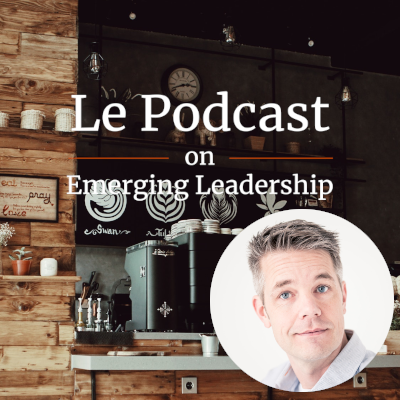
What does it take to help organizations stay innovative, adaptive, and human as complexity keeps rising? In this episode, Alexis sits down with Jurgen Appelo — author, speaker, and entrepreneur — to explore the stories behind his books, the communities he helped grow, and his perspective on leadership in modern organizations.
Jurgen is best known for Management 3.0, which emerged from a practical question he faced as a CIO: what is the role of the manager in an agile organization? At the time, agile focused mostly on team practices. The leadership part was missing. Jurgen chose that gap as his niche and wrote into it.
They discuss experimentation as the leadership trait that keeps coming back, why community matters — even for introverts — what makes a great talk, the honest difference between being a teacher and being a practitioner, and his post-pandemic reset away from 250 travel days a year.
In this episode, we discuss
- •From CIO to author: how Management 3.0 emerged from a missing piece in agile — the role of the manager.
- •The leadership trait Jurgen keeps coming back to: experimentation with fast feedback loops.
- •Community and belonging — even (and especially) for introverts: ALE, Management 3.0, Happy Melly.
- •Every book is a different baby — Management 3.0, How to Change the World, Managing for Happiness, Startup Scaleup Screwup, and a novel in progress.
- •Teacher vs. practitioner: why being a great writer/speaker is a different talent from being a great manager.
- •What makes a great talk: infotainment, no bullet points, audience intake, stories, humor, and takeaways.
- •Pandemic, hybrid work, and painting your own walls — choosing a different rhythm after 250 travel days a year.
- •One action to grow as a leader: listen to podcasts from very different domains and cross-pollinate ideas.
References mentioned in the episode
- Original blog post — Agility, Innovation, and Leadership with Jurgen Appelo
- Jurgen Appelo's website
- Management 3.0 — Jurgen Appelo's book on leadership in agile organizations.
- How to Change the World — short self-published book on change management.
- Managing for Happiness — practical, full-color book of management exercises.
- Startup, Scaleup, Screwup — 42 tools to grow a scalable business.
- Agile Lean Europe (ALE) — the European community Jurgen helped name and launch.
- Happy Melly — community of professionals committed to happiness at work.
- Richard Branson and Stuart Kauffman — two very different sources of inspiration mentioned by Jurgen.
Transcript
Alexis:
Hey Jurgen, what is your role, and how would you describe it to someone you just met?
Jurgen:
Ah, my role I usually describe that as I am an author and speaker and also an entrepreneur on the side.
Alexis:
Excellent. What was the pivotal moment that led you on that trajectory?
Jurgen:
Well, I think the pivotal moment would be the release of my book Management 3.0. I had been a manager for a good number of years. In my younger days, originally a software engineer, I studied at the University in Delft, but my interests were much broader than just programming. I was never really a geek or a nerd, if you could say that. I was interested in marketing and finance and lots of different stuff.
So it was sort of obvious that I became team leader, manager, and then chief information officer. In that role, I introduced agile practices in the organization where I worked, I introduced Scrum, and had to figure out what is the role of the manager in an agile organization — because at the time this was not really addressed. It was mostly team practices. I'm talking 2001 to 2010 here. So I sort of claimed that as my niche and I wrote a book on it: Management 3.0, and that became a bestseller. Even before it came out, I quit my job because I already got requests for events and workshops that I started to develop. From that moment on I have been acting independently doing lots of cool stuff — first for seven years focused on Management 3.0 and licensing around it, and then I went in other directions experimenting with other ideas.
Alexis:
It's really interesting to me that in the twenty-first century there's a lot of things that changed and are changing and we continue to change. What do you think is the main leadership trait people should care to develop?
Jurgen:
Well, this is the typical question. What is the one best thing — while the actual answer is always: there is no one most important thing, because we're working with complex systems and social systems. They are too complex to just summarize everything in one sentence.
But, that being said, a couple of things come to mind. First of all, experimentation, fast feedback loops — that also applies to management, and I would say this is perhaps the core of agile thinking: fast feedback loops so you learn quickly and with small experiments figure out what the customer wants, what the customer needs, how they respond to ideas. Exactly the same applies to managers and leaders when they want to create better organizations. The customers often, for them, are employees. They need to make sure that people don't leave, and this has become more and more important nowadays.
Alexis:
Excellent, thank you for that. I was lucky enough to meet you in person during the first ALE event in Berlin. I guess it was more than ten years ago.
Jurgen:
Oh cool, yeah, that was a special one. The very first one. It is always nice to have memories of the very first edition of an event.
Alexis:
The feel of the event was really of community and friendship. I would like to ask you what is the place of communities in your life and your work?
Jurgen:
Wow, good question. At the time I was sort of responsible for that event Agile Lean Europe. At least I came up with the name, I even came up with the logo of Agile Lean Europe, and then other people took over and started organizing the event in Berlin that you refer to. Of course I very much felt at the center of that community and still do. I'm happy that there's a new event being organized this year in Toulouse apparently.
It is especially important for someone like me who's actually an introvert and loves being on his own day after day thinking and reading and writing and creating stuff. It is important to feel part of something, to have a sense of belonging. For me, that is the agile-lean community in Europe. I know so many people because I have attended hundreds of events across the continent in almost every country I think. I follow people and they follow me online so we can chat on Twitter or LinkedIn or Facebook or whatever. There's always these weak connections — no matter what the distance is across Europe you feel connected with each other. That's a good feeling, especially as I said for people such as me who do a lot of things on their own remotely. It feels like homecoming when I am at an event and I see friends and followers and people that I know from across Europe. I feel okay, this is the place I belong, these are the cool people that I want to hang out with. That is, I think, the purpose of community: to give you that place of belonging even when most of the time you travel around the world and sit alone in coffee bars or hotel lobbies.
Alexis:
I feel in your different businesses, or in the work that you are doing, that communities are always really present — like with Management 3.0 or Happy Melly we can see a lot of people gathering with each other to achieve a greater purpose. Is it really something that is real or is it my perception of it?
Jurgen:
No, that's just people gathering together around a specific topic. Like indeed there is a Management 3.0 community. Of course there are other communities that I am either responsible for or involved in. But for me, they're all part of a larger community out there as I said, which is agile- and lean-oriented people. They sort of gather together in these subcommunities in different constellations. So you keep running into the same people, basically, in whichever subcommunity you find yourself in — and that's nice and I think that's important to have.
Alexis:
You mentioned already the Management 3.0 book. You wrote several books. How to Change the World was a nice small one that you offer for free on your website. The experience with Managing for Happiness was probably an interesting one. And the latest, Startup, Scaleup, Screwup. What is that experience of writing books? You've said you like to be on your own thinking, writing, reading. What were the different experiences you had with those books?
Jurgen:
Well, it's a cliché but it's true. Every book is like a different baby in a sense. They're all different kids with different personalities and different histories. So Management 3.0 took me several years to write. A lot of research went into that, a lot of reading of popular science books and articles. That was a very different project compared to the last one for example, Startup, Scaleup, Screwup, where basically the publisher said: can you please write another book — doesn't matter much about what it is but we want to sell another one. That was sort of a compliment of course, because when publishers want another book it means that they earned money with your previous one.
I thought at the time, okay well, if I'm going to write another book I want it to be about the stuff I'm doing now — which was, I was leading a startup at the time and trying to make that work. So that seemed like a good combination. In that case, the creation of the book took me, I think, about eight, nine, or ten months. It had to be done within a year and I traveled a lot. I spoke with a lot of people across Europe — startups and scale-ups — so I did quite a few interviews. A very different process for that one, a very different kind of book. But I enjoy each one of them. Indeed as you said, How to Change the World was a very small one that was a self-publishing experiment. And Managing for Happiness is again different — it is a horizontal book, not vertical, very colorful. That was my requirement with the publisher at the time, that I wanted a full-color book. So they're all different. And the fifth one is going to be a novel, so that's again a completely different book that I am working on now. That's fun. I'm always trying something new that I haven't done before.
Alexis:
I'm glad that you're working on the next one. I will be interested in reading that novel. That's excellent. You've been recognized by Inc.com in the top 50 management and leadership authors. There's probably hundreds of writers in the field of leadership and management. What makes some of them more successful than others? Is it their expertise as practitioners, or what?
Jurgen:
Interesting that you say that. I just published a blog post today actually with my learnings of the last three years of running a lot of experiments, and one thing that I realized is that I'm a much better writer and speaker than practitioner when it comes to management and leadership. This sounds weird, but if you compare it with other disciplines — for example, the best teachers of music are not necessarily themselves the best musicians, and vice versa, the best musicians are not necessarily good teachers of making music. It's the same in sports: if you have great sports coaches, the best in the world, it doesn't really mean that they themselves are really good in the field as athletes. And also great athletes are not necessarily good coaches. So there's a difference between being a teacher of something and being the practitioner of something. They're actually different talents.
That's something that I have noticed myself. I love the teaching aspect of it, I like creating workshops, I like writing about things, I like talking about stuff. And yes, I am also as I said an entrepreneur on the side because I also like the practical experience. But it doesn't mean that I'm the best manager or leader out there. In fact, I would say I'm a mediocre one for sure. Don't hire me as a manager because I happen to write books on the topic — that's very different. The top-rated Nobel-winning economists are probably really bad at running companies, because it's something different. Observing and writing about it, really understanding how a field works, is very different from operating in that field and being successful as a practitioner. That's something I had to realize in the last three years where I sort of found out: well actually I suck in some areas, but then I have great insights because of my learnings and I'm able to write about it and then I inspire other people who are practitioners and they can use my input. So that's win-win, I suppose. That's why I say first I am a writer and speaker, and I do some entrepreneuring on the side because it's fun to have practical experience and to fail and sometimes succeed. I will never be the best entrepreneur out there, but the best entrepreneurs out there are actually pretty bad speakers and writers. So we all have our own roles, I suppose.
Alexis:
Exactly, and I really like the fact that you are looking into that and you are still doing experimentation. You're still working on different projects so you can also test ideas yourself, and not only inspire people. I think the two things are useful, and I'm always a little bit worried about people who are only doing the teaching part.
Jurgen:
Yeah, for sure I agree. And my approach is slightly different from others, because there are plenty of authors and speakers out there who are coaches or consultants. They go into companies and they help managers and leaders or other kinds of employees doing their stuff, and that's great. There's nothing wrong with that. There's just a different approach and I am not like that. I have a different role. I often say I operate at a thirty-thousand-foot view. I have more of an abstract understanding, I see patterns across the world — that also makes it easier for me to come up with new models and new insights. On the one hand, that's a benefit. On the other hand, the drawback is that I do not have the deep experience of observing what happens in specific companies on the inside. So I don't really stand with my feet in the mud, so to speak, except for my own little companies where I run experiments. That sort of compensates for me for the lack of direct experience I have with large corporates, because I'm not very interested in coaching and consulting — I would not be the best person to do that.
Alexis:
Thank you. You're already a very successful speaker. How would you describe what you bring as a speaker, and what are the keys to success for a really great speech?
Jurgen:
It is infotainment. You need to make sure that you have a message, that there are takeaways. You need to understand the audience, so I always ask my clients: what kind of people are there in the room? Is it only engineers, or is it across the company, or is it mostly management? How many? So I usually have an intake before an event so that I know what kind of audience I encounter. You need to entertain people. You need to make them laugh and tell interesting stories and experiences and not just show models or bullet points. Definitely no bullet points. That's basically it. Tell stories, be funny, and make sure you understand the situation the audience finds themselves in so you can relate and make the right connection. I have a vast library of content — stuff I can talk for hours. Literally I've done that a few weeks ago when I recorded a course for a client in Brazil. The recordings were in London and I just used my existing materials. I thought, my god, I have so much. I talked for five hours and I was still by far not through everything that I had.
So I have quite a bit of stuff that I can make selections from. Understand the audience, be funny, share stories — and that will take you 80% towards success, I suppose.
Alexis:
Thank you. Did the pandemic and that shift to a hybrid world of work affect your work as a speaker? Will you go back to events, or will you do everything from your home?
Jurgen:
Well, first of all the pandemic was terrible of course for my line of business. I just looked it up yesterday — I had my last trip home from Melbourne, Australia where I had done a workshop on the fourth of March 2020. So exactly seven days later the World Health Organization named the COVID virus a pandemic officially. So I was home just in time, and then all events in my calendar were being canceled one after the other. It was like dominoes — they were falling over and I was like, oh my god, what is happening here. All my income for the rest of the year was evaporating basically. Never waste a good crisis as they say, so I experimented, I came up with alternative ideas, I ran online meetups and workshops and it became other business models.
I actually learned from that experience that I don't want to go back fully like the way things were, because in 2019 I traveled I think about maybe two hundred and fifty days per year — and that was absurd, that was a lot. I don't want to be away from home that often anymore. I have a wonderful house. We bought a house two months before the COVID pandemic hit, coincidentally — just in time, interestingly enough, and that was a great coincidence. The house needed quite a bit of painting, so I developed a new skill: I am now really good at painting walls and painting doors and everything, and it turns out I enjoy that. I enjoy being able to do something with my hands and make the space that I live in look beautiful. That is so satisfying, and I would never have experienced that if there hadn't been the pandemic — I would just have paid a professional painter and that would not have been the same thing. Now I sit in my chair and look around me and I think, cool, I did that, and I'm very happy with that. I want to be home more in the house that I, to a large extent, painted myself. So for me also it is a case of: I will be in a hybrid situation. I do want to go back to travel because I miss the coffee bars in Stockholm and the people in Warsaw, etc. But yeah, not two hundred and fifty days per year anymore — a bit less.
Alexis:
Yeah, that's good to find that balance. But I'm glad that you're back to events because I'm eager to hear you speak again. So it's perfect.
Jurgen:
Yeah, it would be awesome. I have a trip to Prague upcoming, and then from May I have quite a few trips scheduled across Europe mostly, and I very much look forward to that — to be on stage again.
Alexis:
Perfect. I think a lot of people are waiting for that too. You worked with many leaders, and among those you admire, what's the one trait that stands out to you, and how is that trait important to you in the way you see leadership?
Jurgen:
So well, that's interesting. Actually, you're the second person who asked that question this week, and I was also not able to answer it last time, because I read many articles, I listen to many podcasts, lots of books. There are many sources where I draw my inspiration from, and to be honest, there is not one single person who inspires me most. There are dozens, if not hundreds, for different reasons. I could name one random person — Richard Branson. I admire him for the way he manages his companies and the message he gets across: be there for your people first, the people come first, and then they will take care of your customer. They make sure that the customer comes first. I totally agree with that message and it's amazing that he built like 400 Virgin companies all under one umbrella. But that's completely different from others who have been active in complexity science, where I admire the likes of, I don't know, Stuart Kauffman who wrote amazing books on explaining how life evolves — and I have drawn inspiration from that for complex systems such as organizations. So there are many people, I'm not able to come up with one name. Also, I don't think it would be fair to come up with the one person that I admire the most. It's heavily context-dependent on what kind of topic we are talking about. So if you narrow it down to a very specific topic, then it would be easier to come up with names.
Alexis:
It's interesting and I love that you picked something that I think is important for leadership — that idea of people first is something that is important. So you picked one thing there. What's one action you've taken in the past to develop yourself as a leader, and what did you learn from that?
Jurgen:
I listen to podcasts, as I said. Just today as well, I think an hour or something, because I had a long walk through the city from my home to a coffee bar that I enjoy and back. I try to use that time of walking around and sitting in public transport — and I am looking forward to traveling, then I can do even more podcast listening, in those moments where you stand in a security line or sit in a taxi on the way to the hotel and things like that. For me, that's a great way to encounter new ideas that I have not heard before, or just being inspired by thoughts from very different domains.
I listened to a Nobel-prize-winning economist today who got his Nobel Prize for the very agile idea of running experiments, field experiments, because he said that most of economy was a lot of theorizing, coming up with theoretical models of how the world is supposed to work. But he said very few actually went out of their offices into real life just running experiments on businesses and people to see how they behave in response to which interventions. And that was very new for economy and perfectly obvious in medicine for example — you do controlled trials, you have random blind tests and everything, but that was a new idea in the economy. He got a Nobel Prize for that, and what I listened to sounded really agile. So I thought that was super cool, super interesting. And that's what I do to be inspired: I listen to podcasts and there is obviously a lot of reading. But that is one tip that I can give people: just subscribe to lots of fascinating podcasts out there and be inspired by what happens in completely different domains, because you can learn from economy, you can learn from healthcare, you can learn from design, or whatnot.
Alexis:
Excellent, I love the advice. Thank you very much. Jurgen Appelo is a serial founder, successful entrepreneur, author, and speaker. Thank you for having joined me on the podcast today.
Jurgen:
It was a great pleasure. Thank you, Alexis.
 Castbox
 Amazon Music